


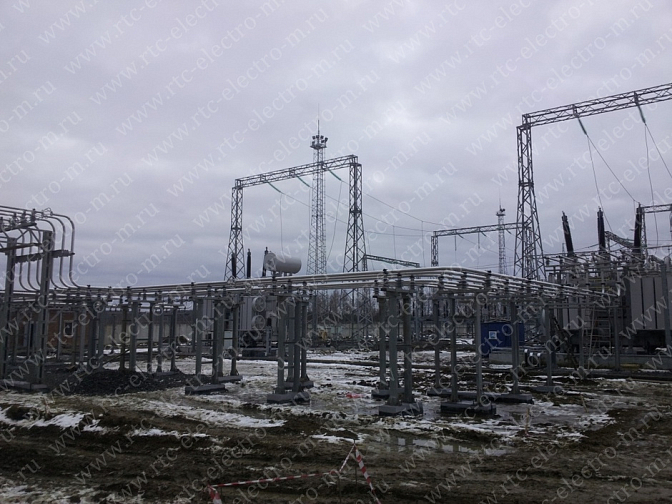
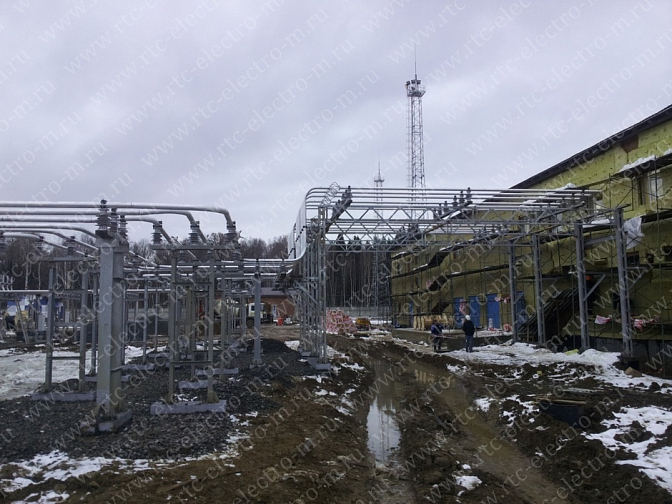
Open busways with rigid busbars are designed for making electrical connections of high-voltage equipment in open and enclosed switchgear of power plants and substations in three-phase alternating current circuits with a frequency of 50 and 60 Hz, nominal voltage of 6–35 kV, and nominal current up to 6.3 kA.
Exposed cable buses TPO
rigid busbar

Rated current
up to 6300 A

Rated voltage
up to 35 kV

Protection rating
IP00

Operating conditions
-60°...+40°С
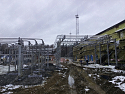
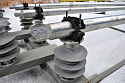
Details
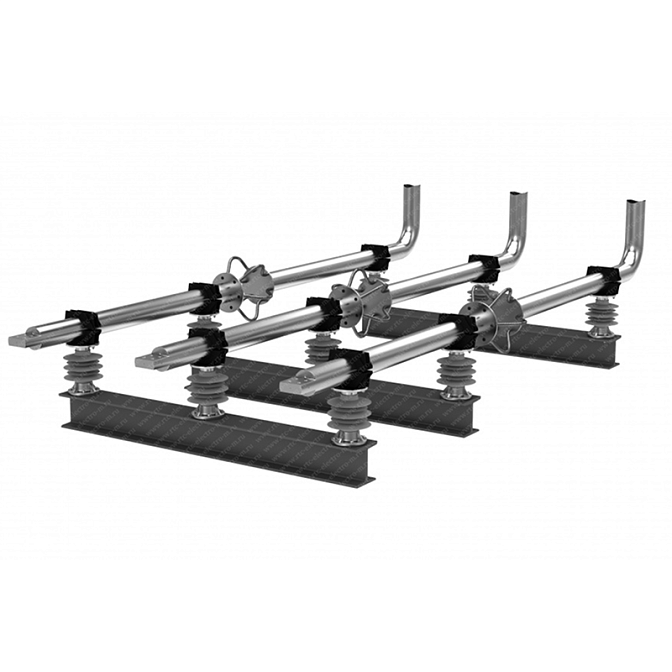
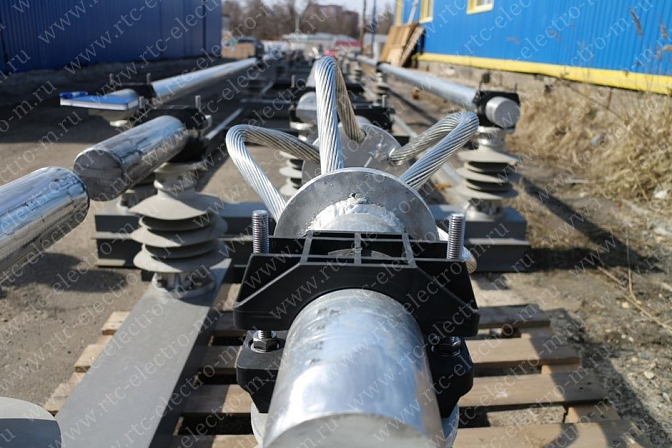
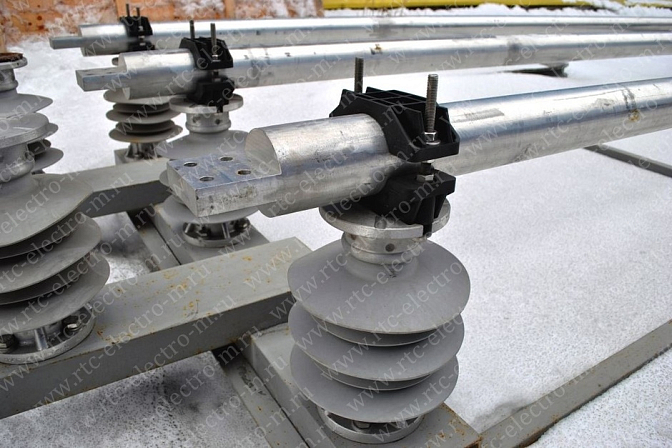
The busway consists of sections of various configurations (straight, bent) with a maximum length of 12 meters, flexible connections, bus holders, insulators, and compensators for connection to power equipment.

Connections of the busway to the terminals of high-voltage equipment (detachable) are made using flexible links (compensators) and do not allow loads in the busway to be transferred to the equipment terminals. Welded joints of busway elements made of aluminum and its alloys are performed by arc welding in a protective gas environment.
The busway is delivered to sites as a high factory-ready product.
The delivery set, in accordance with the design documentation, for a specific site includes:
- busway sections;
- compensators for connecting sections together and for connecting the busway to equipment;
- busway mounting elements for building structures and fasteners.
The documentation set for the busway includes:
- certificate;
- operation manual;
- installation instructions;
- design documentation;
- packing list;
- warranty certificate.
Examples of marking the open busway in documentation and when ordering:
The marking “TPO-20-2500-81UHL1 TU 3414-001-66892460-2014” means an open busway with a nominal voltage of 20 kV, nominal current of 2,500 A, electrodynamic withstand current of 81 kA, UHL design, placement category I.
“TPO-20-2500-81 U3 TU 3414-001-66892460-2014” — the same, but U design, placement category 3.
Decoding of the product marking:

Warranty period – 5 years from the date of delivery.
Busways are supplied complete with support insulators, bus holders, and flexible connections designed to compensate for thermal expansion and to ensure connections to the terminals of electrical apparatus in accordance with the technical specifications for specific sites.


